Media Translation, Subtitling & Voiceover Services
For US streaming platforms, broadcasters, production companies and podcasters.
Last reviewed August 24, 2026 by the Prism Linguistics editorial team
Prism Linguistics provides media translation services for US streaming platforms, broadcasters, production companies, podcasters and agencies: translated subtitles and closed captions, voiceover and dubbing scripts, audio and video transcription, and marketing transcreation in 326 languages. Files are checked against your platform's style guide, pre-release content is handled under NDA, and quotes come back free, usually within 60 minutes during business hours.
Media translation has its own physics. Twelve syllables on screen for two seconds. Lip-sync that has to land within a fraction of a frame. A joke that has to be funny in two languages but can't be the same joke. The difference between a good subtitler and a great one is whether the viewer ever notices the subtitles exist.
This page is the starting point for media work. The deep specialist pages sit one click away: subtitling and captions, audio transcription and video transcription each cover their own craft in detail. What follows explains what we handle, how the pieces fit together, and what a typical job costs.
What US Media Clients Bring Us
The work that lands on our desk most often, from season drops to two-minute news clips.
Film & Documentary
Festival submissions, documentary interviews in foreign languages, and finished features that need subtitles for a US release or an international one.
Streaming Content
Series and specials localized to platform spec: translated subtitles, SDH captions and forced narratives, reading-speed compliant for each target language.
Broadcast News Clips
Foreign-language footage transcribed and translated for air, with fact-checked quotes newsrooms can attribute with confidence.
Podcasts
Episode transcripts, translated show notes, voiceover scripts for dubbed episodes and translated promo copy for cross-market releases.
YouTube & Social Video
Captions for content that plays on mute, translated titles and descriptions, and subtitle files ready for upload to YouTube Studio.
Ad Campaigns
Commercial scripts and campaign lines transcreated rather than translated, so the idea survives even when the words can't.
Press Releases
Announcements and press kits adapted for each market: the facts stay put, the framing moves to fit how the local trade press actually reads.
Subtitles and Closed Captions, Built to Platform Spec
Three different things get called subtitles, and picking the wrong one costs a round of revisions. Translated subtitles carry the dialogue into another language. Closed captions are same-language text the viewer switches on and off. SDH adds what a deaf viewer would otherwise miss: who is speaking off screen, a door closing, music shifting under a scene. We produce all three.
Subtitle work follows the Netflix Timed Text Style Guide for each target language, and same-language captioning follows BBC Subtitle Guidelines or your platform's equivalent. Reading speed, line breaks, character counts and timing tolerances are checked before any file is signed off. Delivery covers SRT, VTT, TTML, EBU-STL, SCC and SMPTE-TT, conformed for upload to Netflix, Amazon, YouTube Studio or your MAM.
That is the short version. The full detail, including SDH conventions, forced narratives and how burned-in subtitles are handled, lives on our dedicated subtitling and closed captions page. If subtitles are the whole job, start there.
Audio and Video Transcription for Production Teams
A transcript is one of the cheapest items in post and one of the biggest time-savers. Editors log rushes from it, producers search it, and subtitlers build from it instead of starting at zero. Most subtitling jobs here begin with one.
We produce verbatim transcripts where every hesitation matters, which usually means documentary interviews and anything a legal team will read. Edited transcripts where readability beats the false starts. Timecoded transcripts where someone needs to find one moment inside ninety minutes of footage. Speaker labels and inaudibles are marked throughout, and difficult audio, crosstalk, location noise, heavy accents, is part of the job rather than an exception to it.
For interviews, podcast episodes and location sound, see audio transcription. For footage, video transcription returns timecoded transcripts and subtitle-ready files from the same pass, which is the usual first step toward a subtitled deliverable.
Voiceover and Dubbing Scripts, Translated and Timed
Before anyone books a recording booth, the script has to work in the target language, and that is the part we own. Our linguists translate and adapt dialogue for lip-sync, phrase-sync and voiceover, with emotional and paralinguistic cues marked and formatting a voice actor can actually read from. A line that runs four seconds in English can run six in German, and the picture doesn't stretch. So the adapter cuts, reorders and rephrases until the timing holds and the meaning survives.
What you get back is a studio-ready script with cue points marked and timing notes throughout, so your studio can record clean on the first take. Corporate video, e-learning modules, ad voiceover and audiobook scripts all go through the same process. If the same video also needs subtitles, say so up front: we translate once and split the output into both deliverables, which is faster and cheaper than commissioning them separately.
Marketing Transcreation for US Ad Campaigns
Campaign copy is where literal translation goes to die. A tagline built on an English pun rarely survives a straight rendering into Spanish, and a claim that reads as confident in one market reads as boastful in another. Transcreation starts from the idea instead of the words: the brief, the audience and the effect stay fixed while the language is rebuilt around them.
We handle campaign lines, video ad scripts, social copy and the print pieces that travel with a launch. Printed campaign material runs through our brochure translation service, where layout and typesetting matter as much as the words. When a campaign hauls a whole product experience with it, apps, landing pages, e-learning builds, that is localization work, and the pages around an embedded video are covered by website translation so terminology matches on both sides of the click.
Corporate communications that sit next to campaign work, investor updates, internal announcements, product documentation, belong with our business translation services. Spanish leads nearly every US media brief, and our Spanish translation services page covers that pair in depth; the full language list runs to 326.
Media Language Services at a Glance
What each service delivers, and where to read the full detail.
| Service | What you receive | Full detail |
|---|---|---|
| Translated subtitles | Timed, reading-speed compliant subtitle files in SRT, VTT, TTML or EBU-STL, to platform spec | Subtitling & captions |
| Closed captions / SDH | Same-language captions with speaker IDs, sound cues and timing tolerances to broadcast standards | Subtitling & captions |
| Audio transcription | Verbatim, edited or timecoded transcripts of interviews, podcasts and location sound | Audio transcription |
| Video transcription | Timecoded transcripts of footage plus subtitle-ready files from the same pass | Video transcription |
| Voiceover & dubbing scripts | Studio-ready scripts, timed and adapted, with cue points and paralinguistic notes marked | This page, or request a quote |
| Marketing transcreation | Campaign lines, ad scripts and launch collateral rebuilt for each market | Brochure translation, localization |
Media Translators Matched to Genre and Register
Language pair is the entry requirement, not the qualification. Our media translators are matched to the content itself: drama, comedy, factual, kids, sports, news. A subtitler who is excellent on documentary can be flat on comedy, because comedy timing on screen is a separate skill from comedy in print. Matching by genre is how the register survives translation.
Every linguist is a native speaker of the target language, professionally qualified and background-checked, with documented prior work in the genre before they touch yours. Files are QC'd against the platform style guide before sign-off, and pre-release material moves under NDA with access limited to the assigned team. With 326 languages covered, that includes the pairs most agencies decline — and for those, matching matters even more, because the pool is smaller.
Fast Turnaround for Broadcast News Cycles
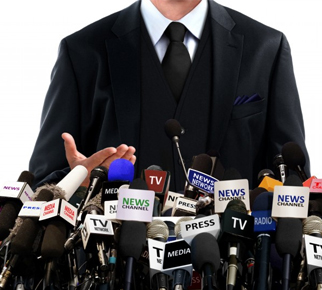
News does not wait for a translation schedule. A newsroom with foreign-language footage at 10 a.m. usually needs the translated quotes before the afternoon rundown, not a delivery estimate for Thursday. We keep that pace where the material allows it: a short clip in a common language can often be transcribed and translated the same day, subject to linguist availability.
The honest caveat is that speed depends on runtime, language and how clean the audio is. A two-minute clip in Spanish is a different job from twenty minutes of crosstalk in a language with a dozen qualified US linguists. When you send the material we tell you straight away what the deadline can bear, and we would rather say no than put a broadcast slot at risk. For standing arrangements, newsrooms that deal with recurring source languages can set up a rate and a named contact in advance, which removes the quoting step when minutes matter.
How to Order Media Translation
A typical episode, clip or campaign, start to finish.
1. Send the file under NDA
Upload the master file or share a screener link through our quote form, or call +1 (833) 282 8883. We sign your NDA before anything is opened.
2. Confirm spec and languages
We confirm the style guide, delivery format, target languages and deadline, then send a fixed quote, usually within 60 minutes during business hours.
3. Translation and QC
A linguist matched to your genre translates and times the work. Files are checked against your platform's style guide before sign-off.
4. Delivery in your format
Files arrive in SRT, VTT, TTML, EBU-STL or the format your platform requires, with revisions covered on the first round of internal review.
What Media Translation Costs in the US
Pricing in this sector follows the shape of the work. As a guide, US providers typically quote translated subtitles by the runtime minute, human transcription by the audio minute, and script or editorial translation per word. Voiceover script adaptation usually prices per runtime minute too, since timing work scales with the footage rather than the word count.
Four things move the number: runtime, how many target languages you need, the deadline, and the language itself. Rare pairs cost more than common ones because the US pool of qualified media linguists is smaller. Commissioning subtitles and a voiceover script from the same translation pass, or supplying an existing shooting script instead of ordering a fresh transcript, brings the total down in most cases. Every quote is free and fixed: send the runtime and the languages through the quote form and your quote confirms the exact price, usually within 60 minutes during business hours.
Media Translation FAQs
Questions US media teams ask before sending a file.
How much does media translation cost in the US?
Do you work to Netflix and broadcast style guides?
Can you subtitle and prepare a voiceover script for the same video?
How fast can you turn around a broadcast news clip?
How do you handle pre-release and embargoed content?
What languages do you cover for media translation?
Series launch in 326 languages?
Surge-capacity subtitle teams for season drops and global launch windows. Send the screener under NDA, and a project manager comes back with a price and a realistic date.
Get a Free Quote Call +1 (833) 282 8883